

X Money launched in July 2026 without a single cryptocurrency, even though Elon Musk is arguably the most prominent crypto advocate in the world. The payment service offers dollar-only transfers, a 6% annual yield on balances, and a metal Visa card with 3% cashback. No Bitcoin, no Dogecoin, no stablecoins. The lesson buried in that choice is more valuable than a hundred enthusiastic announcements.
If you'd asked anyone in 2024 which tech CEO would definitely put crypto at the center of his payments app, the answer would have been obvious. Musk called Dogecoin his favorite coin, pushed Tesla to accept it, and spent years stoking expectations of an “everything app” built on blockchain rails. Then he built that app and left the crypto out.
X Money has finally launched, but without crypto.
, Tanzeel Akhtar (@Tanzeel_Akhtar) July 20, 2026
The bigger story? Building payments infrastructure is far harder than building hype. Licensing, compliance and bank partnerships — not flashy features, determine who wins.
My latest on why X Money is arriving late to a crowded…
What X Money Actually Is (and Isn't)
The facts first. X Money rolled out in late July 2026 to Premium and Premium+ subscribers in the United States, according to the official X Money account. The product offers peer-to-peer dollar transfers, a savings balance yielding 6% annually, a metal Visa debit card with 3% cashback, and FDIC-style deposit insurance through a partner bank. It is, in every functional sense, a Venmo competitor, not a crypto wallet.
After two years of accumulated expectations around crypto, a fiat-only launch is the clearest signal yet. No Bitcoin, no Dogecoin, no stablecoins, no blockchain connection of any kind. The app that was supposed to unify everything chose, at least for now, to unify everything except crypto.
 Jason Jones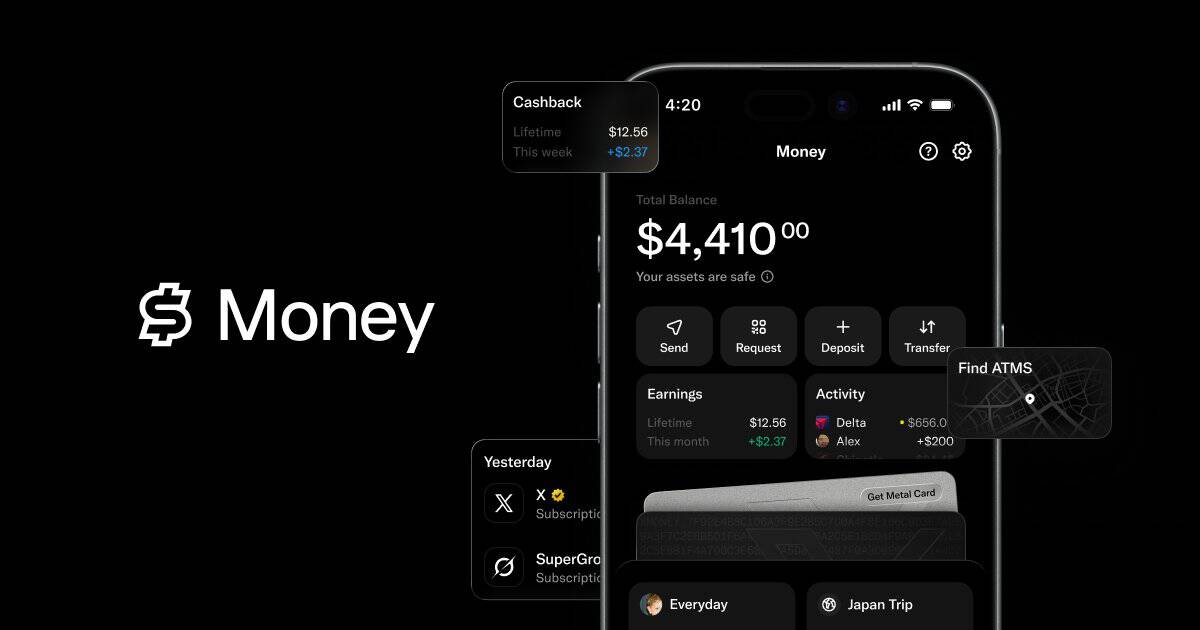
Why Crypto Got Left at the Door
The reason isn't ideological. It's regulatory, and that's precisely where the lesson sits. To launch a payments service across the United States, X had to obtain money-transmission licenses in more than 40 states, each one individually, with the full compliance burden that entails. Folding a volatile cryptocurrency into that framework would have meant fighting regulators on multiple fronts and risking the entire rollout.
The trade-off is straightforward: when a company must choose between moving fast inside existing rules and waiting to figure out crypto, it moves fast. For a product designed for hundreds of millions of mainstream users, crypto remains a regulatory friction point, not an accelerant. That's an uncomfortable truth for the industry, and it's delivered by someone who genuinely loves the asset class.
The Exact Opposite of Samsung
The contrast with another story from the same week is striking. Samsung is actively integrating stablecoins into Samsung Wallet. Two giants, the same week, pointing in opposite directions.
The difference isn't coincidental; it explains everything. Samsung is targeting stablecoins: dollar-pegged, stable, and increasingly well-regulated digital assets. Musk historically wanted to integrate Dogecoin, a speculative and volatile coin. The comparison yields a clean conclusion: crypto enters the mainstream payments world only when it stops being a bet and becomes boring, stable infrastructure.
Two Giants, Two Opposite Directions
What the contrast tells us about real-world crypto adoption
- Samsung: integrating stablecoins, stable and regulated assets. Crypto as infrastructure.
- X Money: excludes crypto entirely, historically tied to volatile Dogecoin. Too much friction.
The Hidden Competitive Threat
There's a detail almost nobody is connecting, and it may be the most consequential part of the story. That 6% yield on dollar balances isn't competing with a traditional savings account. It's competing directly with the promise that crypto platforms have been making for years: put your idle money to work.
While the sector debates whether Musk will eventually add Dogecoin, X Money's real challenge to crypto is different. It offers a meaningful return in stable currency, with zero volatility, inside an app hundreds of millions of people already use daily. That's the exact same territory that yield-bearing stablecoins are trying to claim. The risk for crypto isn't being excluded from X. It's being beaten on its own ground by a simpler fiat product.
Your money, on the world's most powerful network
, X Money (@XMoney) July 27, 2026
𝕏 Money is rolling out to U.S. Premium and Premium+ subscribers starting today pic.twitter.com/2c1UMkB4Kn
The Bigger Picture
The dominant narrative of 2026 holds that crypto is winning mainstream adoption by embedding itself in products people already use. That's true, but X Money adds the fine print: crypto gets in only on the terms of the traditional world, meaning stability, regulatory compliance, and simplicity, and only when it serves the product builder's interests, not the sector's timeline.
The fact that the entrepreneur most publicly identified with crypto built his payments app without it is the most honest reminder the industry could receive. Adoption doesn't happen because crypto is exciting or disruptive. It happens when crypto becomes the easiest, lowest-risk choice for people who have to follow rules. Until then, even its biggest champions will leave it at the door. Readers who want to understand why stablecoins occupy a different position than volatile crypto can start with our guide on how stablecoins work. Official product updates remain on the X Money channels.