

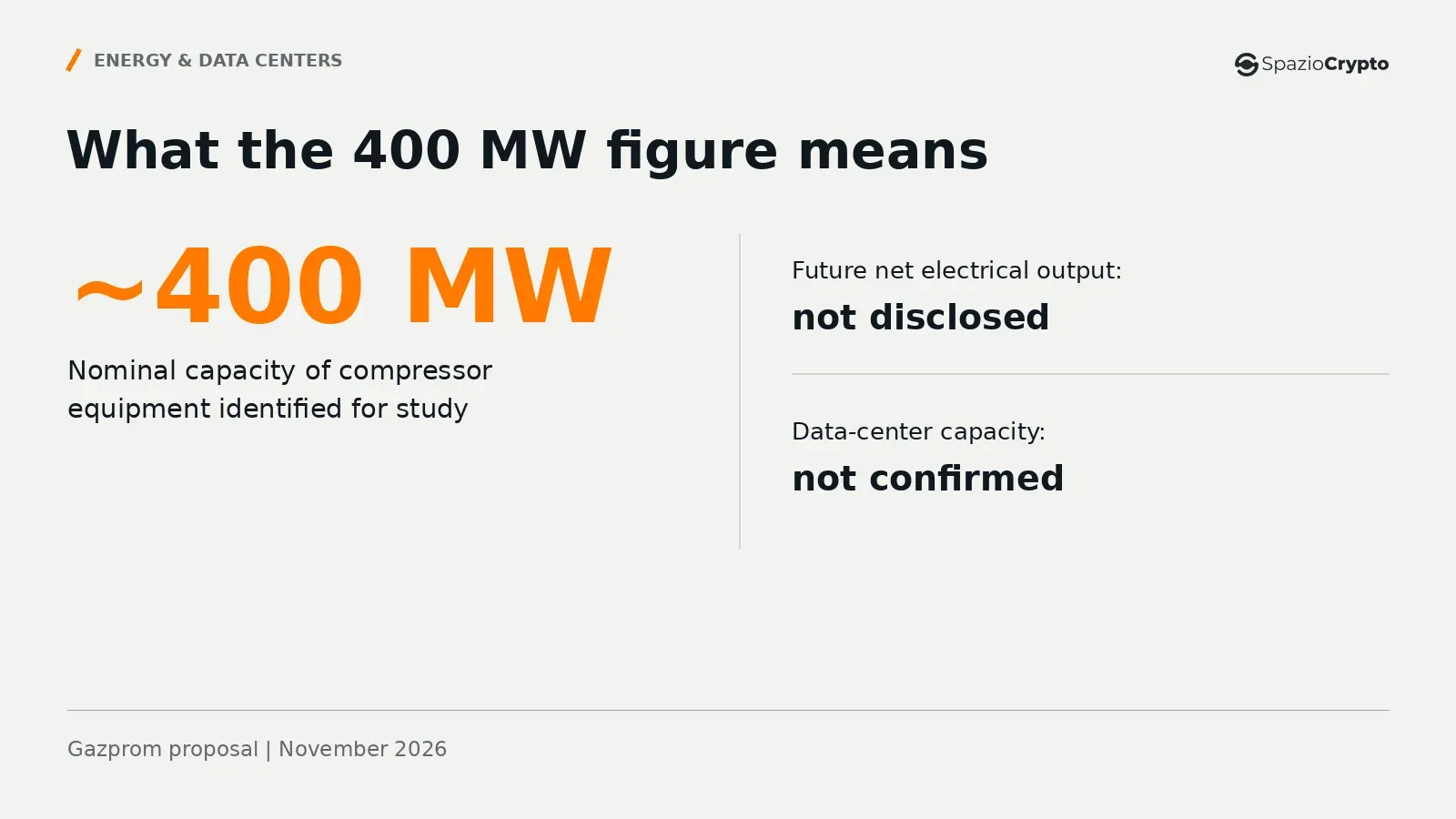
Gazprom is studying, together with Russia's Ministry of Energy and grid operators, the conversion of idle gas compression stations into turbine power plants. The roughly 400 MW figure in circulation refers to the nominal capacity of the compression equipment examined, not to the electrical output these future plants would actually generate.
The Russian energy giant is evaluating how to repurpose gas compression facilities currently held in reserve, under conservation, or facing decommissioning, turning them into electricity generation units. Anatoly Shapovalo, a senior Gazprom executive, outlined the proposal on November 27 at the “Gas of Russia 2026” forum. A working group now includes Gazprom, Russia's Ministry of Energy, the System Operator, Rosseti, and the Market Council association. As reported by Reuters, this is still a preliminary stage: no approved projects or construction starts have been announced.
What Does the 400 MW Figure Actually Mean?
The stations under review collectively hold compression equipment with a nominal capacity of around 400 MW. That number describes the rated power of machinery already installed at the candidate sites, not the net electricity these plants would produce after conversion, and not 400 MW of capacity available for data centers. Gazprom has not disclosed projected electrical output for any individual project, nor the specific sites, investment figures, or firm timelines.
The figure matters because some of the identified sites already have infrastructure and fuel supply systems in place. Reusing them could, according to the company, reduce both time and cost compared to building new power plants from scratch. The conversion still requires technical engineering, regulatory approvals, grid connections, and a viable economic model. As BigpowerNews notes, none of those details have been made public yet: site locations, installed electrical capacity, investment amounts, and schedules all remain undisclosed.
Energy for Russia's Regions and Its Data Centers
Shapovalo identified two possible destinations for the new generation capacity. One is bridging electricity deficits in parts of central and southern Russia. The other is meeting rising demand from data centers and other computing infrastructure. The energy generated would not be exclusively for digital facilities: site location and grid connectivity will determine how much capacity, if any, can realistically serve individual data hubs.
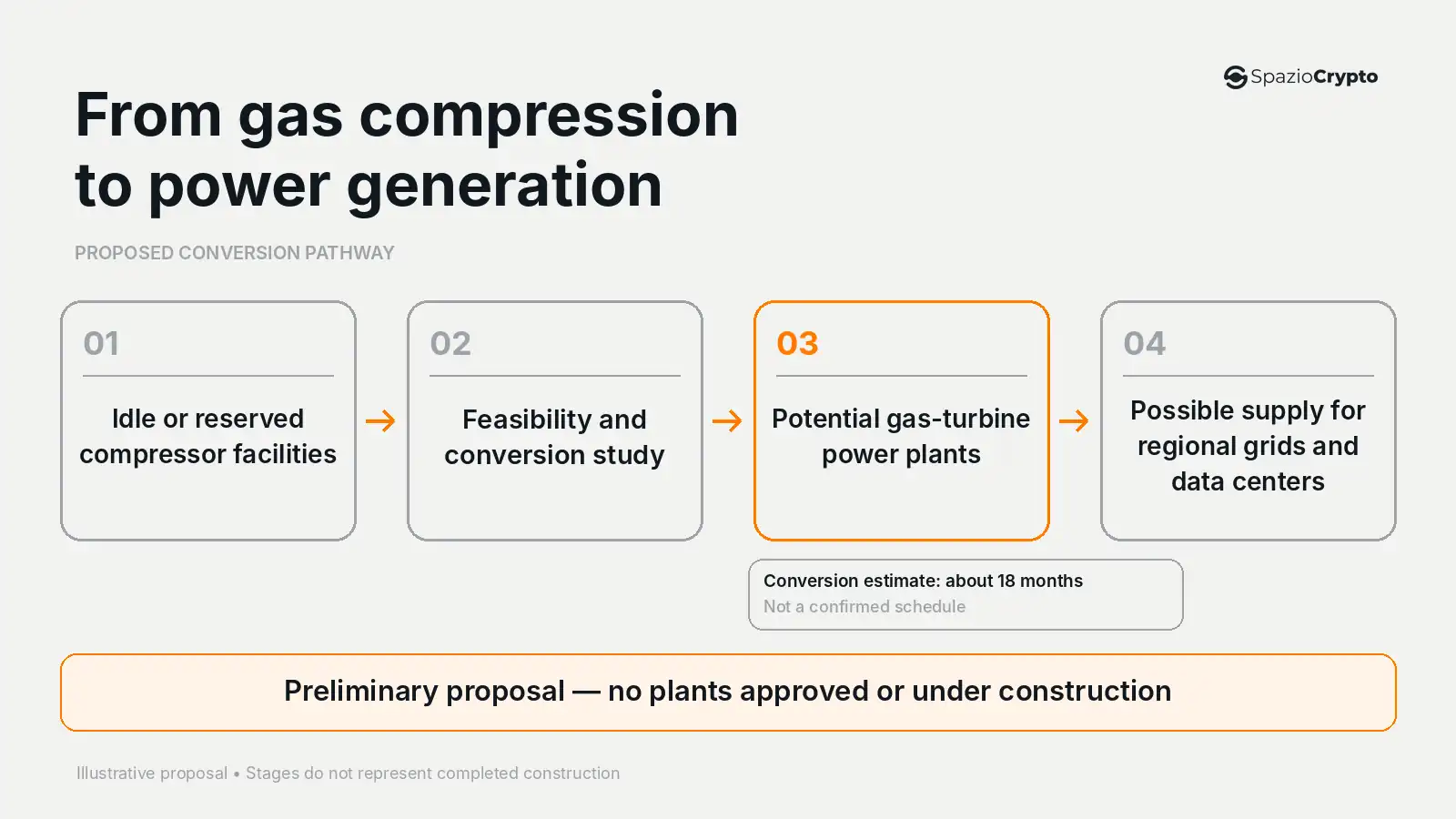
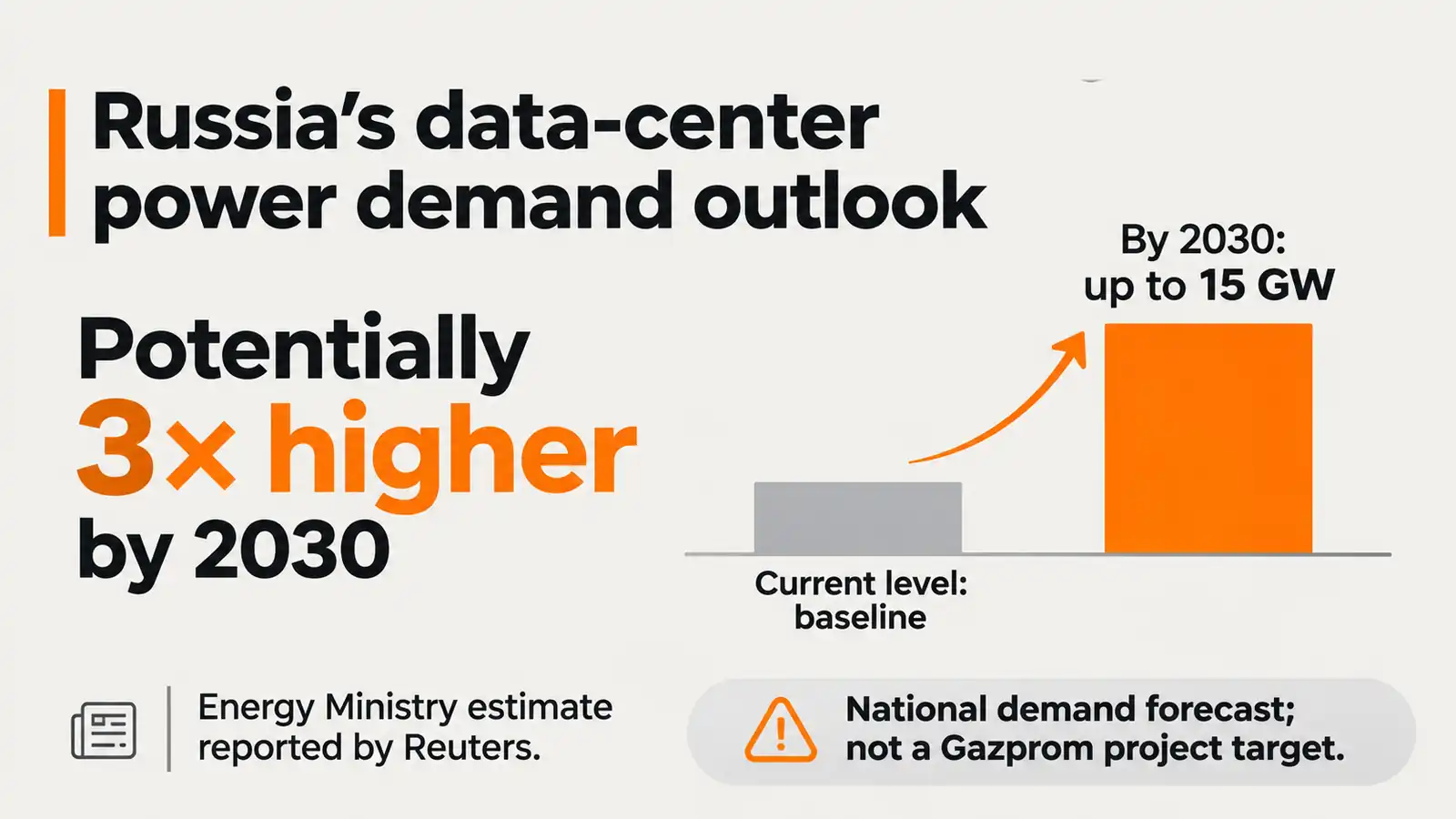
The broader context is Russia's race to secure electricity for compute-intensive workloads. According to Russia's Ministry of Energy, national electricity demand from data centers could triple by 2030, reaching 15 GW. That is a national forecast, not a purchase commitment tied to Gazprom's specific projects. The combination of rising demand and underused energy infrastructure explains why the company is exploring repurposing existing assets rather than commissioning new builds. Reuters also reports that a senior Ministry official estimated conversion timelines at roughly 18 months.
A Plan Still Waiting for Financing and Permits
The 18-month estimate is a preliminary assessment, not a commissioning date. The Ministry has floated the idea of tasking Gazprom with delivering capacity in regions where the grid is under stress and private investors may find new plants insufficiently profitable. The allocation mechanism and investment recovery model have yet to be defined.
The proposal is best read as an attempt to convert stranded infrastructure into domestic electricity capacity. Some sections of Gazprom's gas transport network have seen reduced utilization after flows to Europe were curtailed or interrupted. The potential upside is obvious: sites, gas supply, and much of the physical infrastructure already exist. The open questions are technical conversion costs, grid integration, and whether actual demand from data center operators will materialize at the right locations.
From Gas Corridor to Compute Corridor
What Gazprom is exploring is an industrial repurposing story, not a direct entry into the data center market. The group has not announced construction of any data centers or signed contracts with digital operators. It's investigating electricity production that could, among other uses, supply computing facilities. Until approved projects, net electrical capacity, investment plans, and confirmed customers are published, the 400 MW figure remains a reference to the nominal rated capacity of candidate compression equipment, nothing more.
Sources: Reuters · Prime · BigpowerNews.