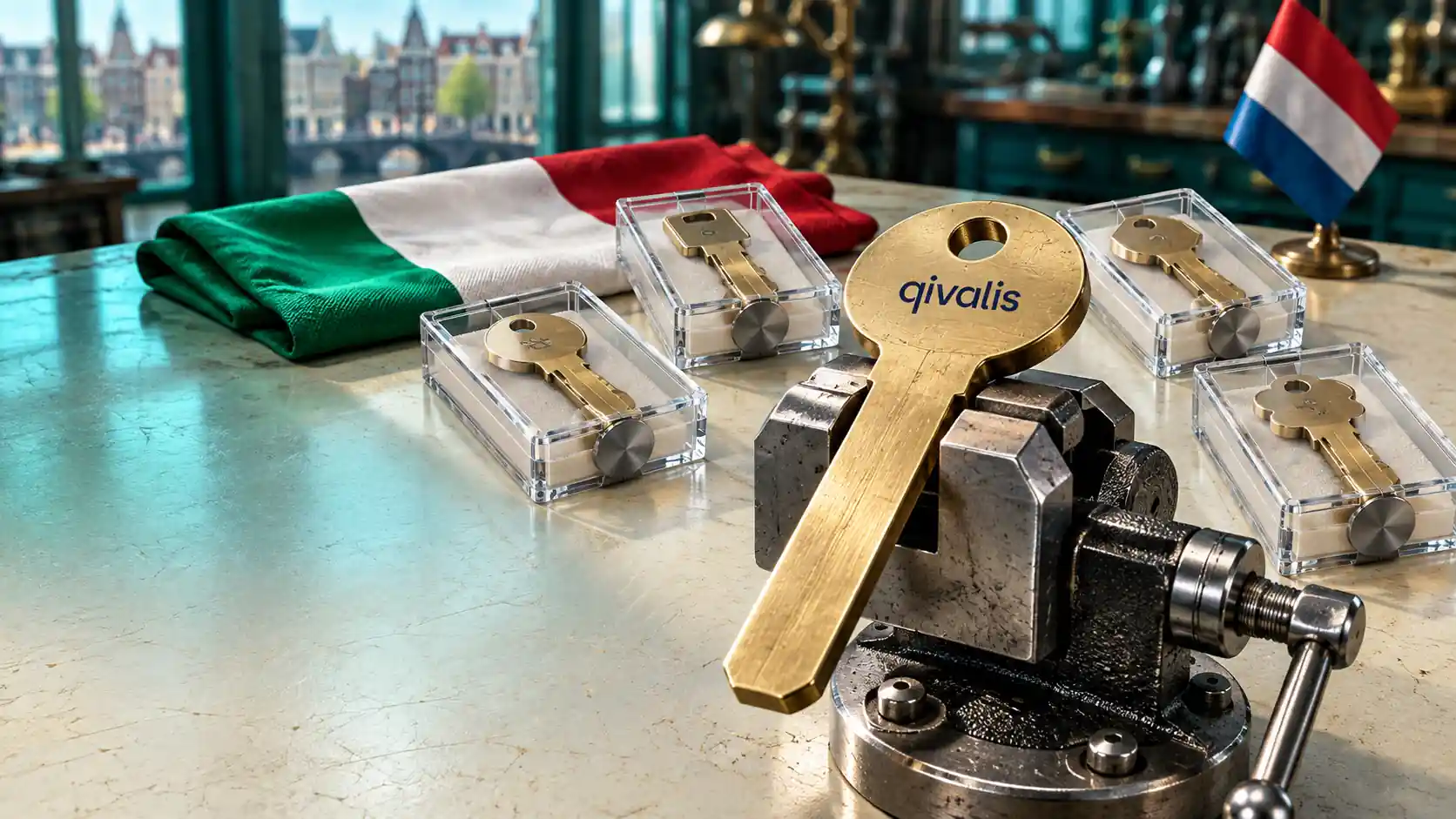
A consortium of 37 major European banks is building a euro-denominated stablecoin. The reported infrastructure choice is Ethereum's public blockchain, not a closed, bank-controlled ledger. The project, called Qivalis, includes four of Italy's biggest lenders: UniCredit, Intesa Sanpaolo, BPER, and Banca Sella. When this detail emerged on September 8, 2026, it reframed the entire story: this isn't just another bank tokenization experiment run on a permissioned network. It's a potential declaration that public blockchain infrastructure is ready for regulated financial money.
Qivalis is built for institutional-scale on-chain payments and settlement - starting on Ethereum, with multi-chain support envisioned as adoption grows. https://t.co/qs2SU267Ss
— qivalis (@qivaliseu) September 8, 2026
The question this raises is pointed: why would some of Europe's most established financial institutions choose Ethereum, the same open network that hosts DeFi protocols and crypto speculation, as the foundation for regulated bank money? Before answering, a few important caveats are necessary to frame the facts correctly.
What We Know, and What We Don't
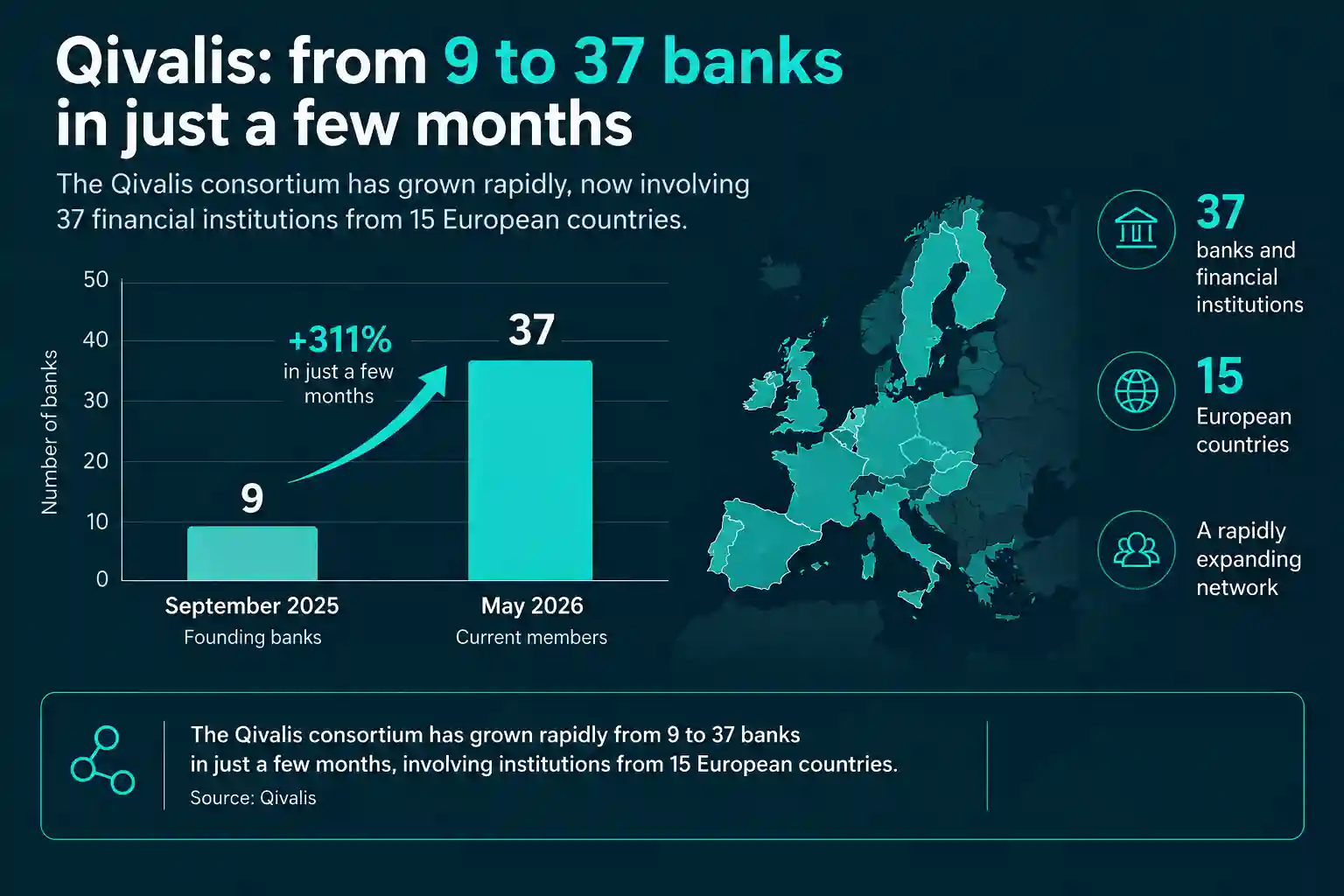
Qivalis is headquartered in Amsterdam and brings together 37 financial institutions across 15 European countries. Its goal is to issue a stablecoin pegged one-to-one with the euro, backed by bank deposits and high-quality liquid assets, and fully compliant with the EU's MiCA regulation. Intended use cases are primarily institutional: cross-border payments, trade finance, and settlement of tokenized financial instruments, with the added benefit of 24-hour liquidity movement.
Two clarifications matter here. First, the token isn't live yet. Qivalis has applied for an electronic money institution license from De Nederlandsche Bank, the Dutch central bank, and the stablecoin cannot be issued until that authorization is granted. The launch is expected in the second half of 2026. Second, the Ethereum detail itself comes from Ethereum Institutional, a source tied to the Ethereum ecosystem, rather than from a direct announcement by the banking consortium. Some observers have noted that other networks remain possible options, and an official, definitive confirmation from Qivalis on its blockchain choice has not been published as of this writing. That detail should be attributed to its source, with appropriate caution.


Why a Public Blockchain?
This is the question that makes the story significant. Most banks experimenting with money tokenization opt for “private” or “permissioned” blockchains: closed, controlled networks accessible only to authorized operators. That's the cautious, traditional approach, keeping full control within the banking system's walls. Germany's Bundesbank, for instance, is actively developing infrastructure along exactly those lines.
Choosing a public blockchain like Ethereum points in the opposite direction entirely, and it's a strategically bold move. It means building regulated digital money inside the open environment where liquidity, users, exchanges, and DeFi applications already exist. The reasoning, as observers describe it, is to go where the market already lives, rather than constructing a walled garden separated from the broader ecosystem. A bank stablecoin running on Ethereum can integrate directly with digital wallets, protocols, and assets already present on that network. It's a bet on openness and interoperability, and it represents an implicit acknowledgment, by centuries-old financial institutions, that public infrastructure carries real strategic value. Ethereum itself has been adapting to accommodate this kind of institutional use, including recent protocol work aimed at simplifying transaction flows for large-scale participants.
The Italian Connection and the Competitive Race
Italy's role in Qivalis is substantial. UniCredit and Banca Sella were among the nine founding members of the consortium. Intesa Sanpaolo and BPER Banca joined in the May expansion that grew Qivalis from twelve to thirty-seven members. Four of Italy's biggest banking names being present at this level signals how actively Italian financial institutions are engaging with on-chain transformation, an area this publication has followed closely in covering the tokenization of Italian finance more broadly.
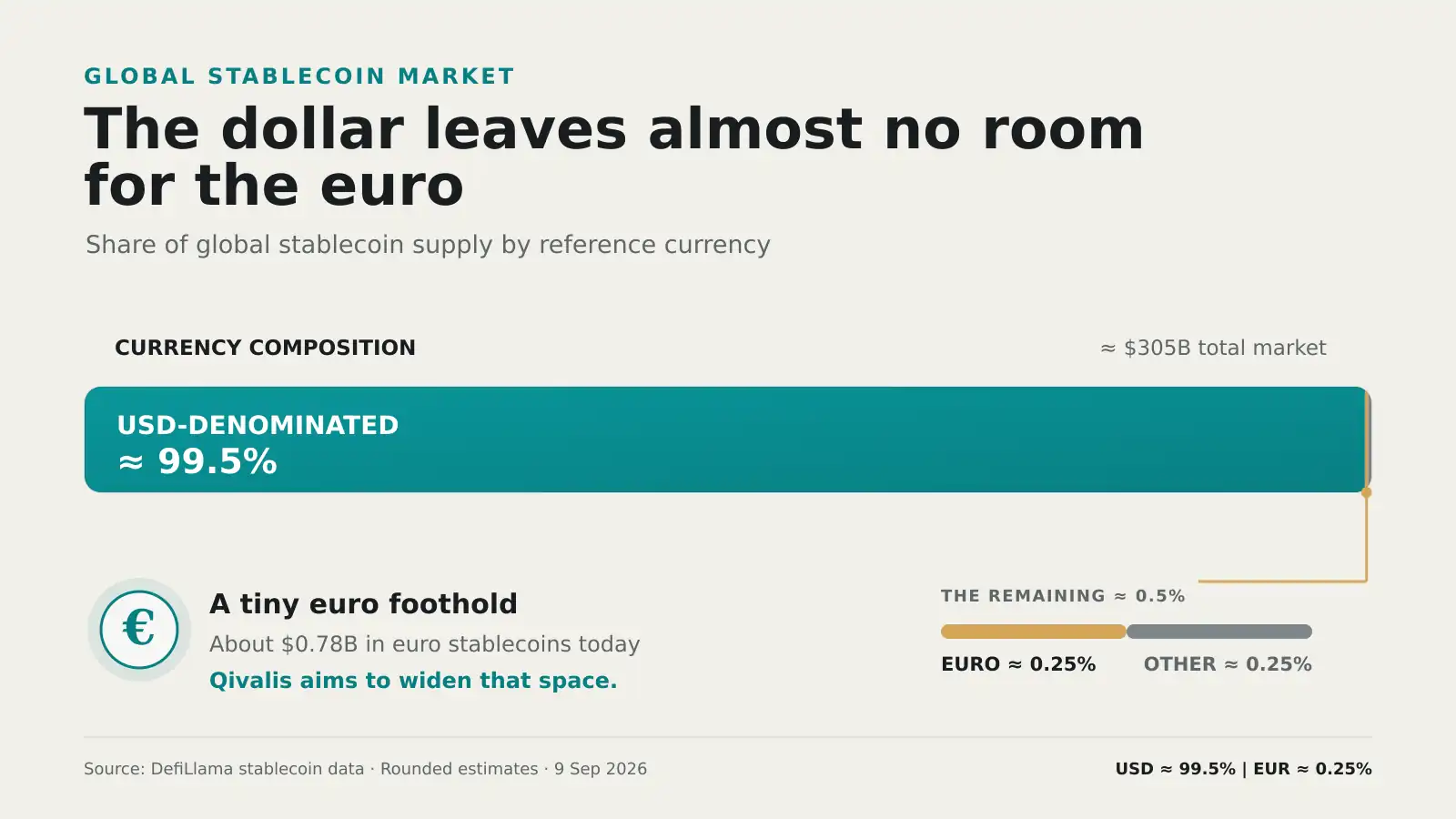
The competitive backdrop sharpens the picture. The stablecoin market today is overwhelmingly dollar-denominated: according to CoinGecko data, dollar-pegged stablecoins account for roughly 99.5% of total stablecoin market capitalization. A euro stablecoin backed by a consortium of major European banks therefore carries a monetary sovereignty dimension too. It's an attempt to carve out space for the single currency in digital finance, reducing European dependence on dollar-denominated instruments. Qivalis isn't alone in this direction: a large consortium of predominantly US banks is separately working on its own shared stablecoin, and players like Revolut have already launched their own euro-pegged digital token. The race to issue bank-grade stablecoins has become a genuinely global phenomenon.
The Bigger Picture
If Qivalis's choice of Ethereum is confirmed, it marks a potentially historic moment in the long convergence between traditional finance and public blockchain networks. For years, banks regarded networks like Ethereum with deep skepticism, defaulting to closed, controlled systems whenever they ventured into tokenization at all. The fact that a consortium this large and this credible is seriously evaluating the issuance of regulated bank money on a public network signals something deeper: public blockchain infrastructure is no longer treated as a risk to be avoided, but as a strategic asset to build on.
Two readings emerge from this. One: the boundary between “traditional” finance and “crypto” finance is thinning to near-invisibility. If bank money starts moving on the same rails as DeFi and cryptocurrency, the two spheres become parts of one interconnected ecosystem. Two: caution on the facts remains essential. The project is ambitious but not yet operational, the EMI license from De Nederlandsche Bank is still pending, and the blockchain choice itself awaits official confirmation from Qivalis directly. In this sector, the distance between a stated intention and a live product can be long, and a great deal can change along the way. The direction, though, appears increasingly clear: the future of money, including bank money, is likely to be on-chain. Readers wanting to understand the instruments at the center of this shift can find a useful foundation in our guide to what stablecoins are and how they work.