


Italian finance tokenization has taken another step forward, this time into genuinely uncharted territory: non-performing loans. Two Italian firms, doValue, a major European credit management operator, and fintech Weltix, have completed the first digital securities issuance within an NPL securitization worth ten million euros. As reported by MarketScreener Italia, the deal is a pioneering move that brings tokenized NPLs from theory into practice, fully within Italian regulatory boundaries.
 doValue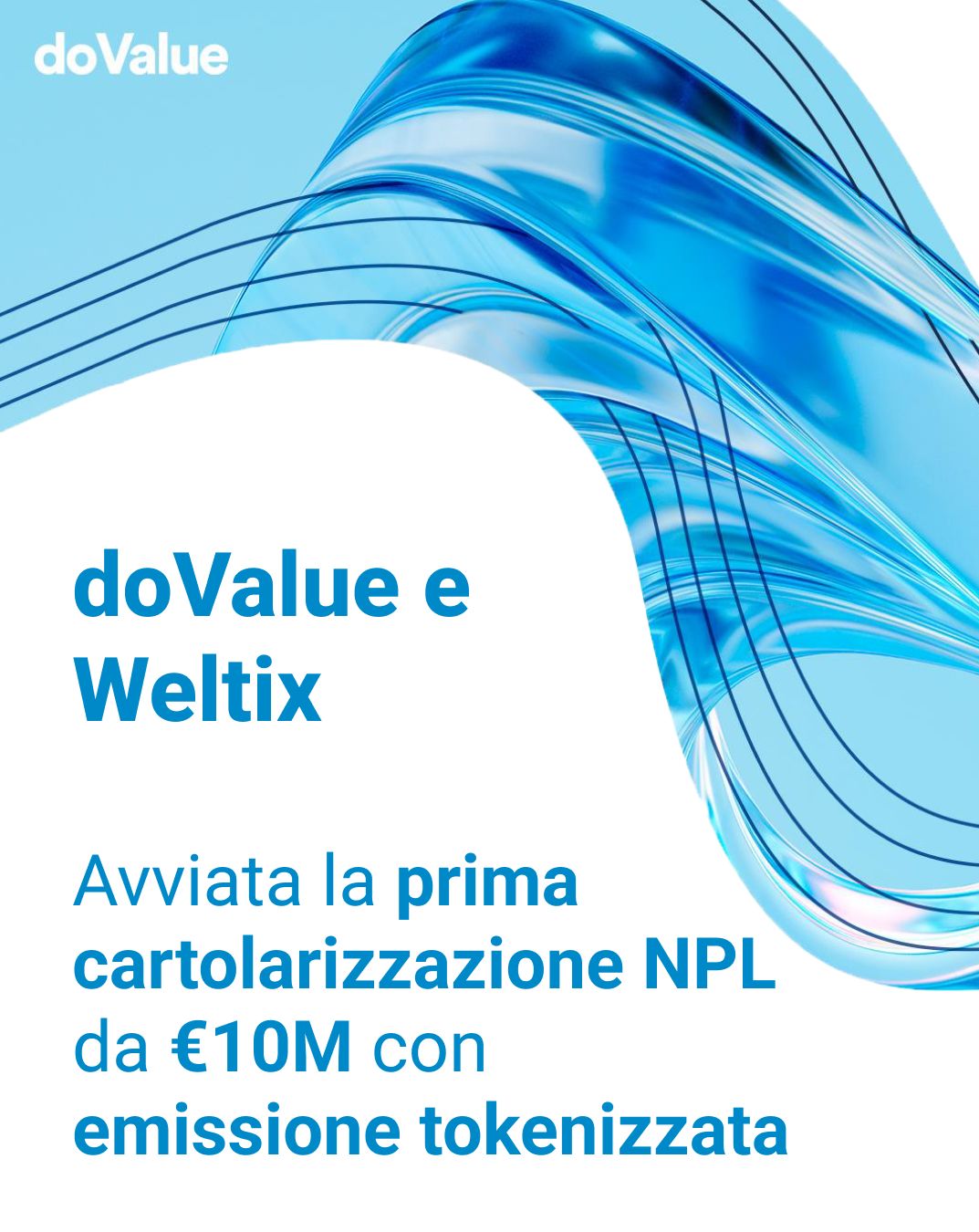
The news is technical, but its scope is significant. It marks blockchain's entry into one of the most intermediary-heavy sectors in all of finance. One clarification is worth making upfront: this is not about turning bad debt into a speculative cryptocurrency. What's happening is subtler and more interesting. Let's unpack what was actually done and why it matters for European markets.
 Publicnow
What Actually Happened, Explained Simply
Two definitions help frame the news. Non-performing loans, or NPLs, are bank loans that borrowers are struggling to repay. Banks routinely package these together and sell them to specialist investors through a process called “securitization”: the loans are bundled into financial securities that can then be bought and sold on the market.
What makes this deal different is that the securities were not issued the traditional way (on paper, then converted to electronic format). They were born digital, directly on a blockchain-based ledger. Weltix, the fintech authorized by Italy's securities regulator Consob specifically for this role, manages the DLT register. doValue, for its part, handled the overall deal structure across multiple technical roles that a securitization typically requires. The entire transaction occurred under the Italian FinTech Decree, which is the legal framework that made these operations possible.


The Real Angle: It's the Infrastructure Going On-Chain, Not the NPL
Here is the part that makes this story genuinely interesting, beyond a routine technical announcement. The critical question is what was actually “put on blockchain.” The bad loan itself has not been turned into a digital currency. What changed is the infrastructure through which the securitization's securities are issued, recorded, and managed.
The securitization sector is notoriously complex, populated by layers of intermediaries, constant data reconciliation between parties, and high operational costs driven largely by the manual processing of large volumes of paperwork. The idea here is to use blockchain to streamline that machinery. If securities are born digital and live on a shared, transparent ledger, handoffs are reduced, processing costs fall, and settlement times shorten. In other words, blockchain is not replacing the distressed loan; it's replacing part of the bureaucratic apparatus surrounding it. This deal follows a trail blazed by other Italian firsts, including the first tokenized bond settled in central bank money, a transaction that involved some of the same technology partners active in this operation.


An Italian Ecosystem Taking Shape
This deal didn't emerge from nowhere. It's concrete evidence of an Italian tokenization ecosystem that is structuring itself at speed. The fact that an operator of doValue's scale, managing more than 130 billion euros in credit portfolios and listed on the stock exchange, is driving this initiative gives it enormous institutional weight. It's not a startup experiment. It's the strategic choice of a front-line actor in the financial system.
Around these deals, a genuine supply chain of specialized expertise is taking shape: from the authorized technology platforms managing digital registers, to the servicers coordinating investors, to the firms providing technical infrastructure. The same names keep appearing across recent transactions, a sign that critical mass in knowledge and infrastructure is accumulating, exactly as is happening across the broader asset tokenization market in Italy. Italy is carving out a leading role in this specific field, running real-world applications ahead of many other countries. This movement fits squarely within the European framework that the European Central Bank has outlined through its tokenized finance projects.
Antonio Chiarello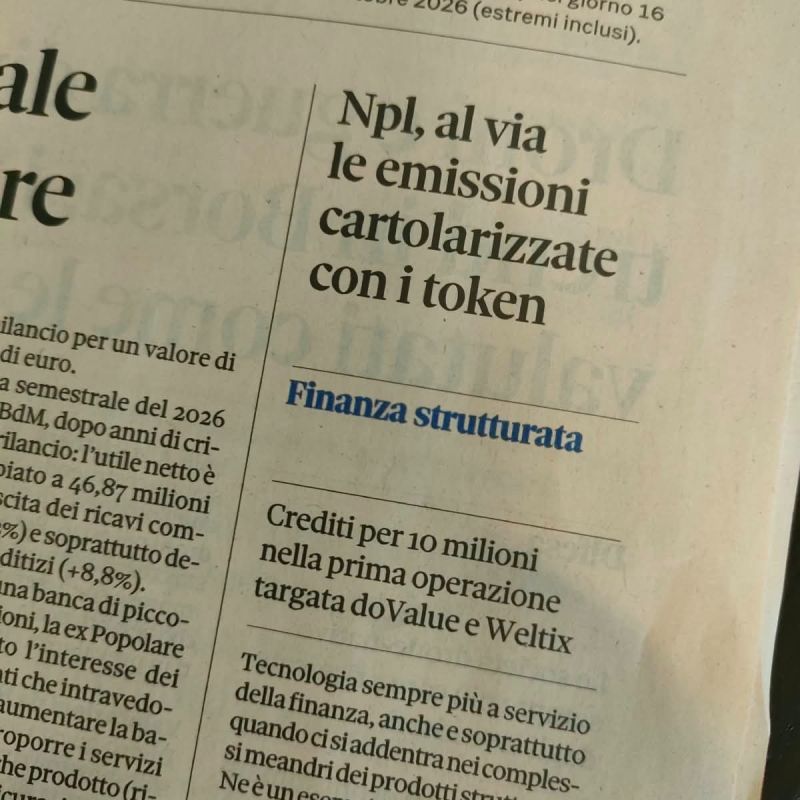
The Bigger Picture
Tokenization entering the world of non-performing credit is significant because it demonstrates how adaptable this technology really is. Blockchain had already been applied to bonds and relatively straightforward financial instruments. Seeing it tackle structured finance, one of the most complex and traditionally paper-heavy corners of the market, signals that its potential reaches much further than most assumed. Wherever a financial process involves multiple intermediaries and high costs, tokenization offers efficiency, transparency, and speed. The same drive to bring traditional markets on-chain is visible globally, as with the London Stock Exchange moving its equities on-chain.
There are two lessons here for any close observer. First, this case confirms that blockchain's genuine revolution, separate from cryptocurrency speculation, may unfold precisely “behind the scenes” of finance, inside the invisible infrastructure that keeps markets running. It doesn't replace financial products; it reinvents their internal mechanics, making them leaner. Second, it's a legitimate source of pride for Italy, which is proving itself an advanced laboratory in this sector, capable of attracting serious operators and delivering regulated, real-world applications. If this model proves it can scale, genuinely cutting costs and settlement times, it could reshape credit management in a fundamental way. Starting to build that here, in Italy, is a story worth telling. For those who want to understand the underlying technology better, the guide on what cryptocurrencies and blockchain are remains a useful starting point.