


Stock tokenization, the process of converting company shares into digital tokens on a blockchain, has taken a decisive step forward. The London Stock Exchange Group (LSEG) announced a partnership with Payward, Kraken's parent company, to bring the top 100 London-listed equities on-chain as xStocks, according to the official LSEG press release. This is no longer a crypto exchange building synthetic versions of well-known stocks. One of the oldest and most prestigious financial institutions on the planet is walking directly into blockchain territory.
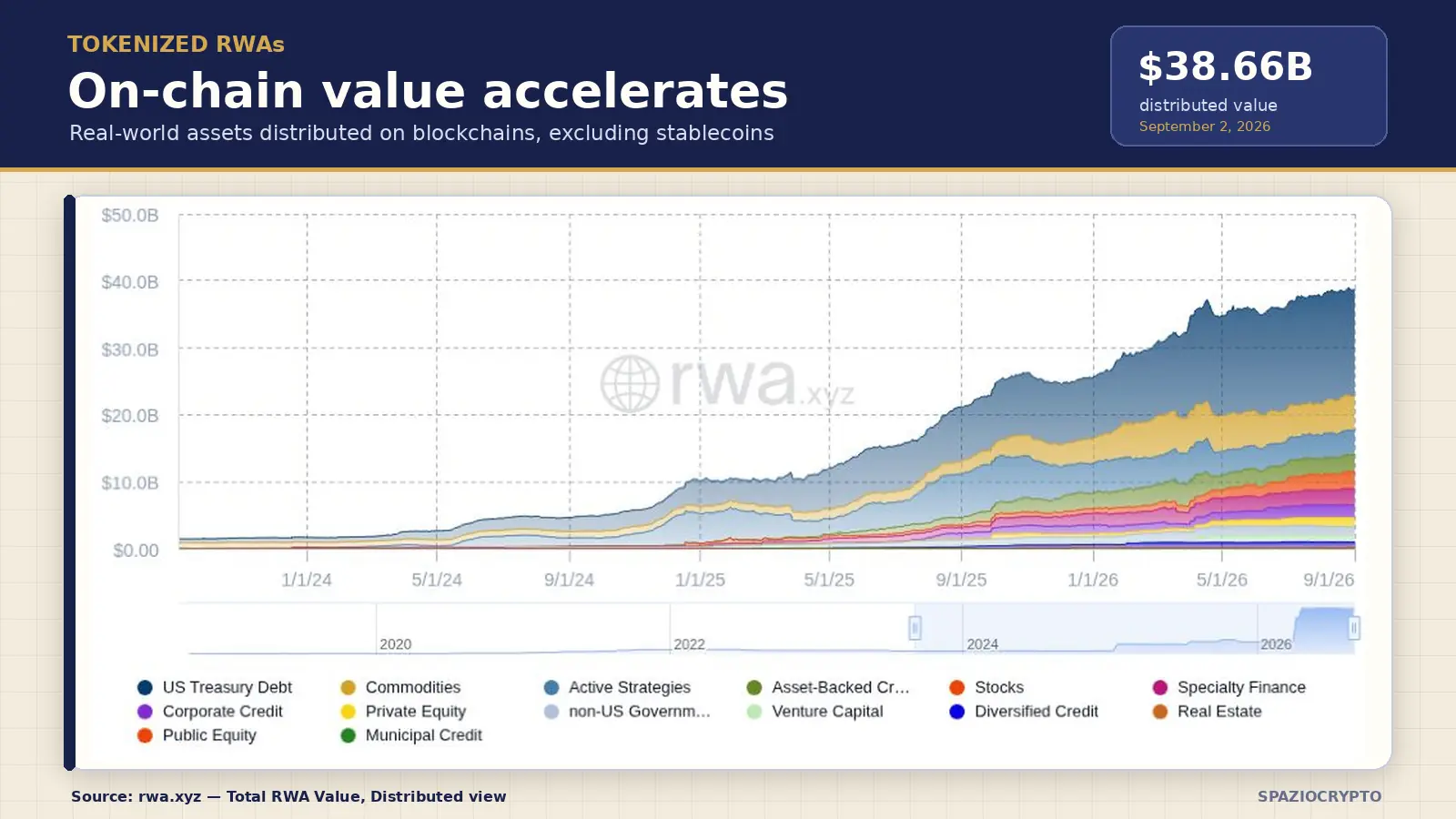
The symbolic weight of this news is hard to overstate. Tokenization has just moved from being a crypto-native experiment to becoming part of the official infrastructure of traditional financial markets. The question this deal raises is genuinely compelling: are we watching tokenization migrate from crypto exchanges to official stock exchanges? Here's what the agreement entails and why it matters.


What the Deal Actually Says
In practical terms, the partnership will see the top 100 companies listed on the London Stock Exchange tokenized as xStocks, digital tokens backed one-for-one by the underlying shares. These tokens will trade 24 hours a day, can be held in personal digital wallets, and will be usable inside blockchain applications. That's a level of flexibility a traditional brokerage account simply cannot match. Per the Payward press release, the first products are expected to launch within weeks, with access planned for investors in more than 100 countries.
One detail stands out, and it's a telling one: at least initially, these tokenized British equities will not be available to UK-based investors, excluded for regulatory reasons. A small paradox that captures the sector's regulatory complexity rather well. In a later phase, subject to regulatory approval, the LSE plans to support xStocks trading on its new extended-hours trading platform, LSE 24, a project designed to dramatically extend market hours. That platform, though, isn't expected to be operational until 2027.

The Revolutionary Part: Native On-Chain Equities
Tokenizing existing shares is already significant. The genuinely radical element of this deal, though, looks further ahead. LSEG and Payward intend to explore the issuance of “native” equities directly on blockchain, issued through the exchange's own infrastructure. These would be securities that are digital from the moment of their birth, carrying the same rights and legal standing as traditional shares.
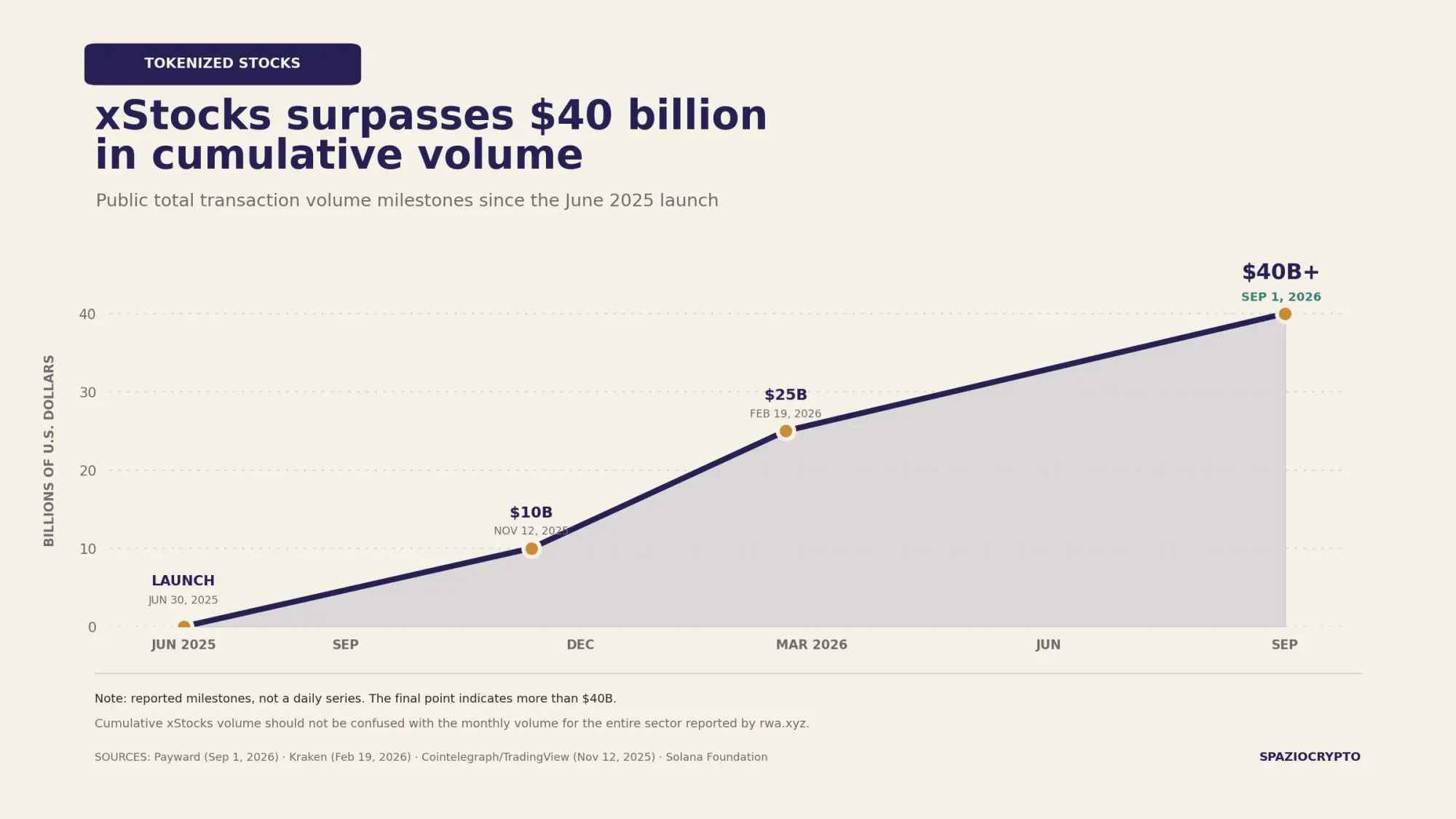
That is the real frontier here. Wrapping an existing share in a blockchain token is one thing. Companies issuing equity natively in digital form, fully integrated into the settlement system from day one, is something else entirely. It would mean rethinking how capital markets function at their core, making them natively digital rather than digitally adjacent. The LSEG's own leadership has emphasized that tokenization holds the potential to change how investors access markets and how companies use them, provided the development preserves trust, rights, and the role of regulated markets. Seeing a 300-year-old institution frame that balance as its central objective is itself a meaningful signal. The same institutional momentum was visible earlier this year when the European Central Bank unveiled its framework for regulating tokenized assets.
Part of a Much Wider Movement
The LSE's move is not an isolated event. It's the most authoritative piece yet of a trend accelerating across global finance. Only days ago, a major US exchange brought the shares of leading American technology companies on-chain, a development we examined in depth in our analysis of Coinbase's tokenized equities. And Payward, the same company at the centre of the LSEG partnership, is also in negotiations to bring Hyperliquid's perpetual contracts into the regulated US market.
What makes this case genuinely different is who's leading the charge. In earlier instances, crypto-native actors were building bridges toward traditional finance. Here, traditional finance in its most institutional form, a stock exchange with more than three centuries of history, is taking the step toward blockchain and adopting its tools. That's a real inversion: not crypto knocking on the door of finance, but finance opening the door to crypto. A dynamic that echoes developments elsewhere in Europe, including Italy's first tokenized bond settled in central bank money.
The Bigger Picture
The LSE's entry into equity tokenization is a turning point that goes well beyond one partnership. It represents the definitive validation, from the very heart of traditional finance, of a technology that was born at its margins. When an institution with centuries of history decides to put its most valuable assets on a blockchain, it's effectively declaring that this technology is the future of capital markets, not a passing trend.
Two lessons emerge for anyone watching this space. First, tokenization is the most durable and cross-cutting trend in finance right now, capable of merging two worlds that were once entirely separate into a single ecosystem that is more efficient, continuous, and accessible. Second, and just as important, clear-eyed caution still applies: behind the promise of global access and around-the-clock trading, significant open questions remain, from regulatory approvals to the precise legal nature of these tokens. Prudence is warranted, as it always is when approaching genuinely new instruments. The direction, though, is now unmistakable: the future of equities, and of financial markets more broadly, will be increasingly on-chain. The fact that the institutions that built those markets are now leading that transition is the most convincing evidence that the shift is already well underway.