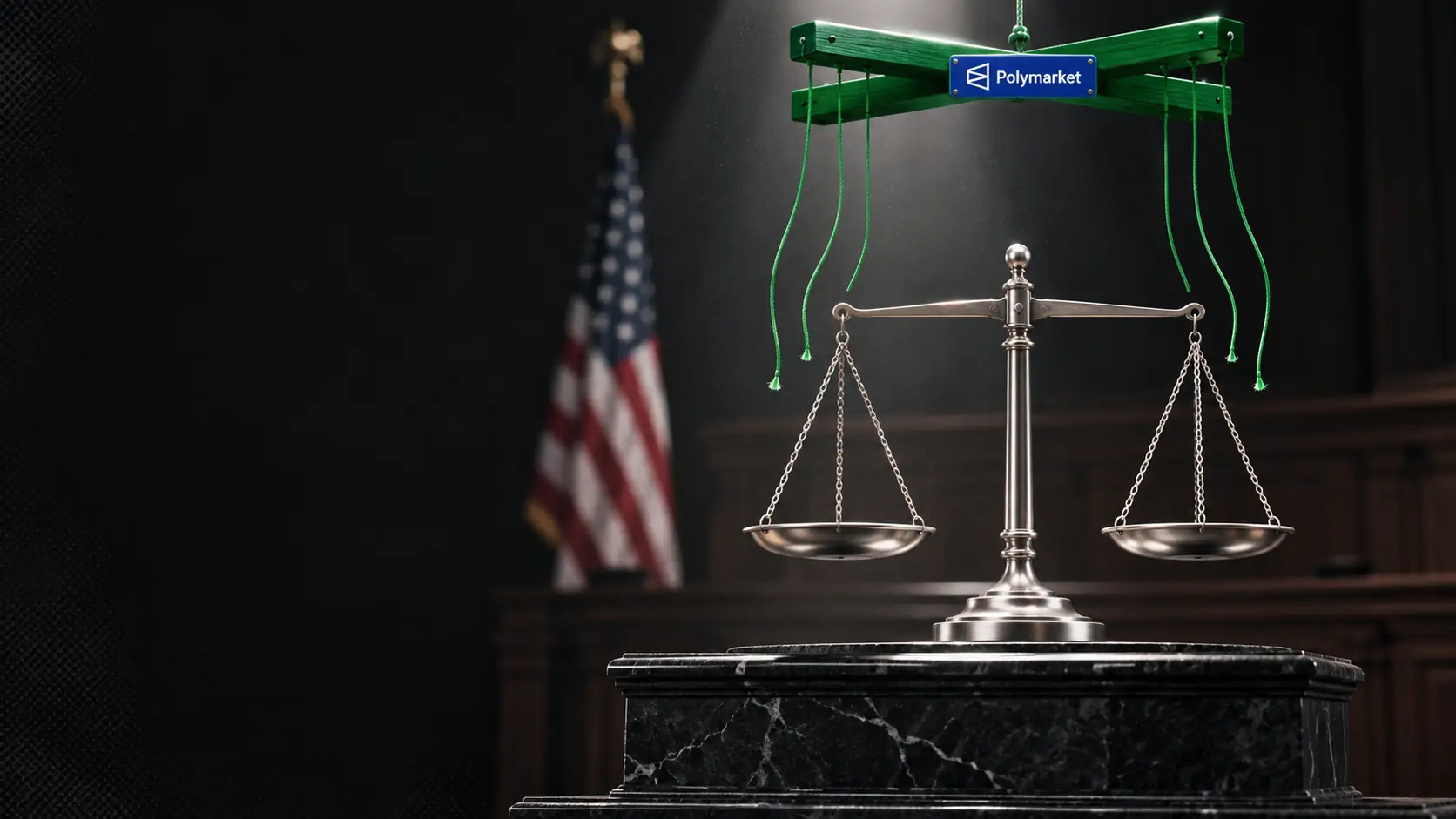


Crypto-linked groups spent approximately $176 million across more than one hundred congressional races ahead of the November 3 midterm elections, according to a Reuters analysis of campaign finance documents published on October 27, 2026. The watchdog organization Public Citizen, cited by Bitcoin Magazine, says crypto is now the single largest corporate spender in 2026 federal elections. The stated goal: build durable congressional support that survives whatever administration follows Trump.
Reuters' original investigation is not directly accessible via our tools. We are citing it through Bitcoin Magazine and crypto.news, both of which covered it on October 27. SpazioCrypto reviewed Fairshake's official FEC filing directly, updated through October 14.
Where the $176 Million Figure Comes From
The $176 million is not a single committee's budget. It is a Reuters reconstruction across multiple committees and filings, with data current through October 20. The bulk of it, approximately $150.8 million, flows through Fairshake, the industry's lead super PAC, and its affiliated committees Defend American Jobs and Protect Progress. Other crypto-linked groups account for roughly $25 million. Fairshake and its affiliates therefore represent about 85.7% of the reported total. That percentage is our own calculation based on the rounded figures Reuters reported.
A super PAC can raise and spend unlimited sums but cannot coordinate directly with candidate campaigns. Spending therefore takes the form of independent expenditures: TV spots, digital advertising. Targeted ads for or against a named candidate. Among the primary funders of the network are Coinbase, Ripple. Andreessen Horowitz, according to both outlets that picked up the Reuters report. The Solana Policy Institute spent $4.9 million on the midterms separately.
What the FEC Data Actually Shows
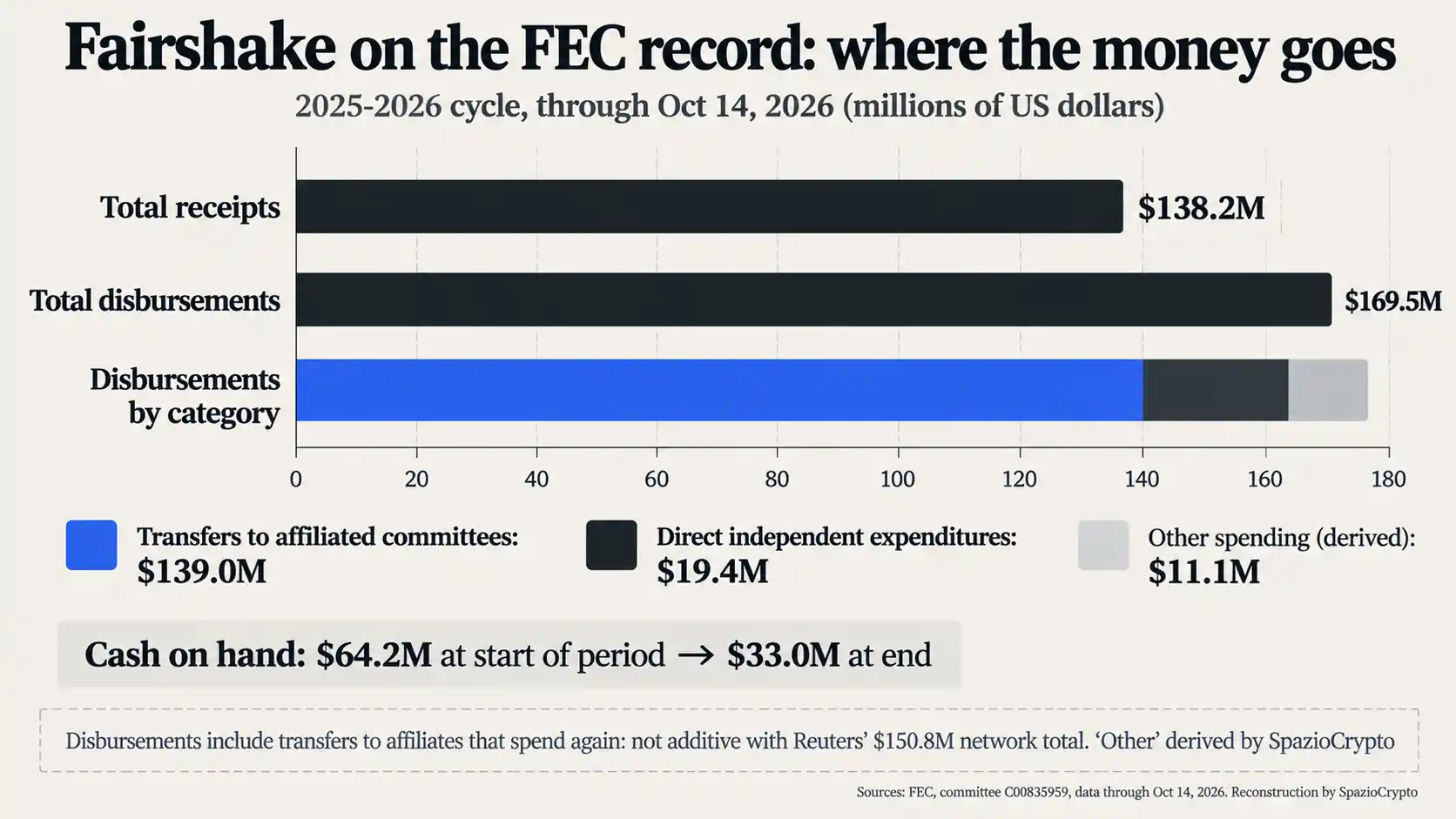
Fairshake's official filings tell a more layered story and deserve careful reading. In the 2025-2026 cycle through October 14, the committee recorded $138.2 million in receipts and $169.5 million in disbursements, according to FEC records. Cash on hand fell from $64.2 million to $33 million in the most recently reported period. Of the disbursements, $139 million are transfers to affiliated committees; $19.4 million are independent expenditures made directly by Fairshake.
Put differently, about 82% of everything leaving Fairshake's treasury moves to other committees in the network, which then spend it. That ratio is our own calculation from FEC data. This breakdown explains why the FEC's $169.5 million figure and Reuters' $150.8 million figure cannot be added together or compared directly: they measure different things over different date ranges. For context, Fairshake spent $196 million in the 2024 cycle.
Ohio: The Most Expensive Test
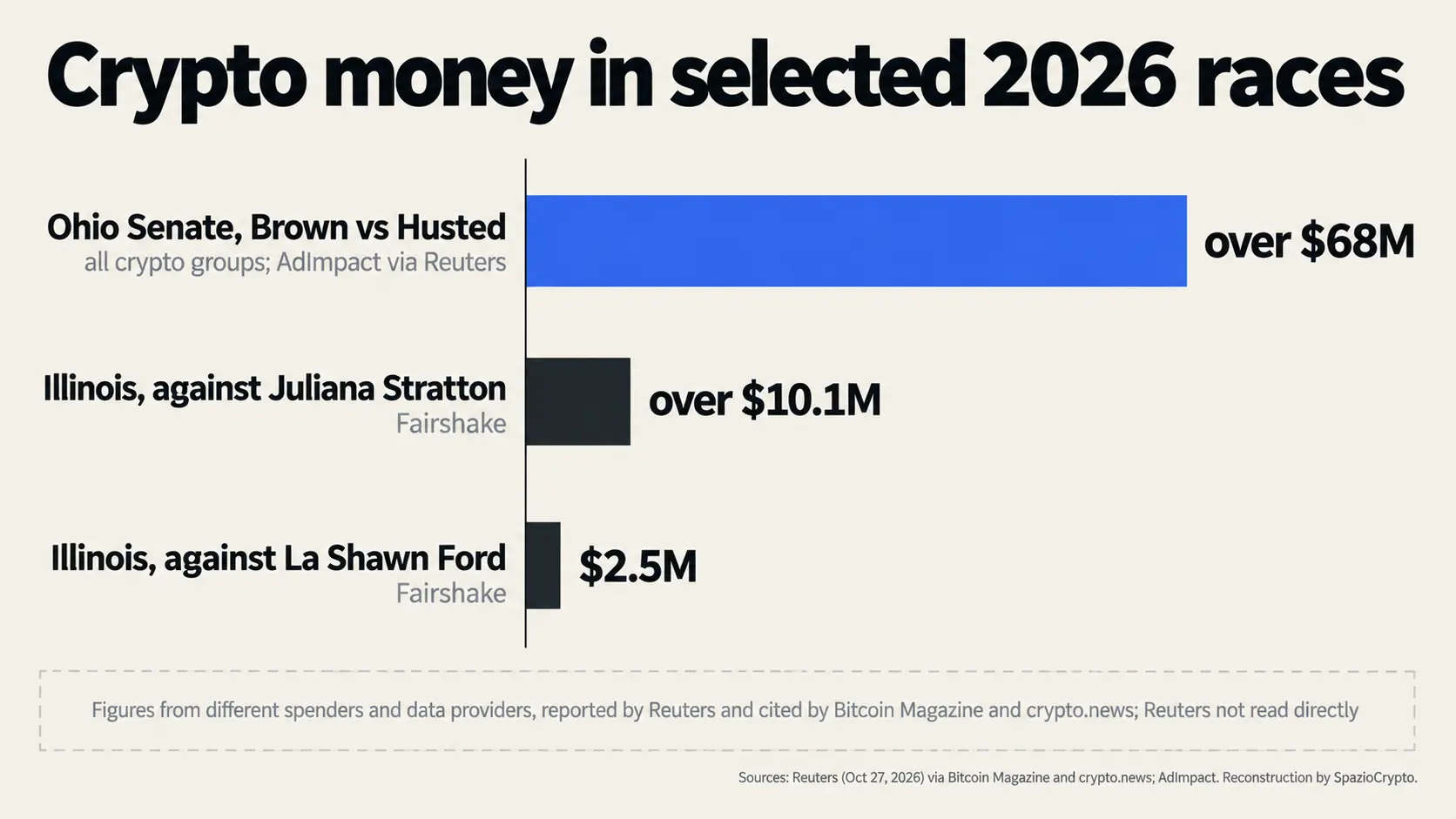
The single costliest race is the Ohio Senate contest. According to AdImpact data cited by Reuters, the crypto sector spent more than $68 million on the race between Democrat Sherrod Brown and Republican Jon Husted. The matchup carries history: in 2024, Fairshake helped defeat Brown when he chaired the Senate Banking Committee. A committee linked to the Winklevoss twins spent approximately $6 million in Ohio, according to crypto.news.
The ads running against Brown, as Reuters reports, say nothing about crypto. They focus on taxes and immigration. At least one repeats a claim about IRS agents and social benefits that fact-checkers have already debunked. Patrick Eisenhauer, Brown's campaign manager, said in a statement that “special interests are panicking.” Reuters notes that Senate-level spending has broadly favored Republicans, following Democratic opposition to crypto legislation.
Ads That Never Mention Crypto
Ohio is not an isolated case. In Illinois, Fairshake spent more than $10.1 million against Democratic Lieutenant Governor Juliana Stratton and $2.5 million against Democratic state representative La Shawn Ford. Both won their primaries and are expected to win on November 3, according to Reuters. Ford sent a legal cease-and-desist letter to Fairshake over statements he considers defamatory, linking the opposition to his support for an Illinois law requiring crypto companies to register with the state. “It was personal and it hurt,” he said, as reported by crypto.news.
The transparency issue is the one that cuts most for voters. The ads run through committees with generic names and talk about entirely different policy topics. Viewers, as Bitcoin Magazine notes in its coverage of the Reuters investigation, have little way of knowing who is actually paying for what they see. Fairshake defends the approach. Spokesperson Geoff Vetter argues that the committee supports pro-innovation candidates across both parties, and the group states that 53 of the 58 candidates it backed in primaries or special elections won.
The Real Prize: the CLARITY Act and the Post-Trump Era
The spending has a precise legislative target. The GENIUS Act of 2025, passed with broad bipartisan support, gave the United States its first federal framework for stablecoins, with OCC implementing rules arriving in October, as we covered in our analysis of the yield-ban provisions. Still missing is the market structure bill: the CLARITY Act, which would formally divide oversight responsibilities between the SEC and the CFTC. In September the Senate stalled at 49 votes against 50, well short of the 60-vote threshold, after expectations of a 2026 passage had already collapsed, as we reported in our piece on the procedural vote and 126 proposed amendments.
According to Bitcoin Magazine, Senate Democrats blocked the final vote partly over an ethics clause that would require the Trump family to divest its crypto holdings. In the meantime, regulators are moving independently: the CFTC has opened a consultation on federal rules for crypto exchanges, and the SEC has put forward its own Regulation Crypto Assets package. The industry's argument is that legislation provides certainty that a future administration cannot undo by memo. Colin McLaren of the Solana Policy Institute described the spending as “an investment in the future” in remarks reported by Bitcoin Magazine.
From 2018 to Today
The contrast with earlier years is stark. In 2018, according to Bitcoin Magazine, lawmakers couldn't even secure a congressional hearing room for the first bipartisan crypto roundtable, which ended up being held at the Library of Congress. During the Biden administration, the SEC imposed more than $6 billion in penalties across 98 cases, according to a Georgetown Law study. Today, Stand With Crypto, the advocacy association launched in 2023 with Coinbase's support among others, counts 332 lawmakers with an “A” rating, up from 96 at launch.
The network's funders are also the primary actors in the rules being written. Ripple recently received final OCC approval for its national trust bank charter. Public opinion, though, remains cooler than the candidates' positions suggest. An Ipsos poll for the DeFi Education Fund, conducted on 1,545 US adults in September, found that 22% had owned or used crypto, but only 13% considered a candidate's support for blockchain, crypto, or DeFi an important factor when the terms were named explicitly.
Crypto Election Spending in 2026: What Is Confirmed
What is established, and what is not
- Reported: According to Reuters, approximately $176 million spent by crypto-linked groups across more than one hundred races through October 20, of which about $150.8 million came from Fairshake and affiliates. Confirmed by FEC: Fairshake recorded $169.5 million in disbursements through October 14, with $139 million transferred to affiliated committees.
- Not disclosed: Individual donor amounts for the current cycle, a complete party-by-party breakdown of spending, and the full list of races covered in the Reuters total.
- To watch: The November 3 results in Ohio and Illinois, subsequent FEC filings after October 14, and the fate of the CLARITY Act in the incoming Congress.
The Bigger Picture
Our read, stated as such: the crypto industry has stopped buying visibility and started buying continuity. The $176 million isn't aimed at passing a law before November 3. It's aimed at ensuring the next Congress, regardless of who occupies the White House after Trump, includes enough members who don't treat crypto as a topic to avoid. That's a mature lobbying strategy, comparable to those of other heavily regulated industries. The reputational risk sits in the method itself: ads that talk about other things and committees with generic names feed exactly the kind of distrust the sector says it wants to overcome.
Four concrete signals are worth watching. First, the Ohio outcome, where spending is highest and the contest most direct. Second, Fairshake's next FEC disclosures, which will show how much cash the committee holds heading into 2028. Third, the composition of the Senate Banking and Agriculture committees in the new Congress, both of which have jurisdiction over crypto market structure. Fourth, any proposals requiring super PAC ads to disclose their actual funders, which remain the single clearest vulnerability in the current approach.